
A Collaborative Approach Between Chiropractic and Dentistry to Address Temporomandibular Dysfunction: A Case Report
- posted: Mar. 04, 2025
a Chiropractor, ANEW Medical and Rehabilitation, Joliet, IL
b Dentist, Advanced Family Dental, Crest Hill, IL
Received: 1 December 2012; Revised: 14 July 2013; Accepted: 15 July 2013
Key Indexing Terms
Temporomandibular joint disorders; Delivery of care; Chiropractic; Dentistry
Abstract
Objective: The purpose of this case report is to describe the chiropractic and dental co-management of a patient with temporomandibular dysfunction, headaches, and myalgia.
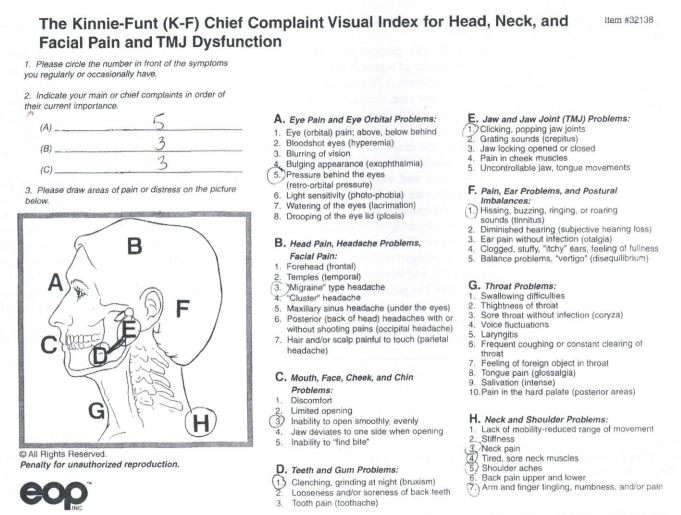
Clinical Features: A 38-year-old black female patient presented for chiropractic care with a chief concern of jaw pain, tinnitus, headaches, and neck and shoulder soreness of 8 months' duration. The patient rated the pain a 6/10. She had a maximum mouth opening of 42 mm, graphed evidence of disk displacement, loss of translation on opening of the right temporomandibular joint viewed on the lateral radiograph, and numerous areas of point tenderness on the Kinnie-Funt Chief Complaint Visual Index. She had decreased lateral cervical flexion.
Intervention and Outcome: Dental treatment consisted of an anterior repositioning splint. Chiropractic care included Activator treatment to the pelvis and the thoracic and cervical spine. Manual manipulation of the temporomandibular joint was performed along with a soft tissue technique intraorally on the lateral pterygoid. Postisometric relaxation in the head and neck region was also done. The patient was treated 6 times over 3 weeks. At the end of treatment, the patient had a pain rating of 0/10, maximum mouth opening of 49 mm, no tender points on the follow-up Kinnie-Funt, and increased cervical range of motion.
Conclusion: The patient demonstrated increased mouth opening, decreased pain rating, improved Kinnie-Funt visual index, and an increased cervical lateral flexion range of motion after 3 weeks of a combination of chiropractic and dental care.
©2014 National University of Health Sciences.
Contact Information
Corresponding author: 115 Republic Ave, Joliet, IL 60435.
Tel.: +1 815 791 7232; Fax: +1 815 483 2071.
Email: [email protected]
Introduction
Temporal mandibular dysfunction (TMD) affects more than 25% of the general population. A study documenting the use of complementary and alternative medicine (CAM) for TMD showed nearly two-thirds of
patients reported using CAM services for treatment.2 As patients are already seeking alternative care, it is possible that collaborative efforts between professions could address coexisting problems in patients with TMD.
A patient with TMD may have multiple conditions that may be related and managed separately. For example, a case described a patient who presented to a doctor of chiropractic with low back pain and obtained relief after the addition of dental orthopedic treatment.3 The opposite results may occur, such as a patient with jaw pain who was treated dentally with no relief and then chiropractic care provided the patient with relief.4
There have been arguments for a more holistic and collaborative approach to treating TMD. The stomatognathic system includes all of the structures involved in speech and in the reception, mastication, and deglutition of food. Ramirez et al5 suggest that "The teamwork structure can be the best option to obtain the best functional state in the stomatognathic system."
As well, there are various associations between TMD and musculoskeletal pain. For example, a study found a correlation between sleep bruxism and the occurrence of TMD and arthralgia.7 The stomatognathic system has an important effect on the nervous system, and TMD can have related symptoms such as tinnitus and headache. For example, a study showed a correlation between cervicogenic headaches and TMD, with 44.1% of participants with cervicogenic headaches also having TMD.9
At present, there are few reports of collaborative approaches between dentists and doctors of chiropractic for the co-management of TMD. Therefore, the purpose of this study is to describe the collaborative treatment of a patient with TMD, headaches, and myalgia.
Case Report
A 38-year-old black female patient presented for chiropractic treatment with a chief concern of TMD.
A Collaborative Approach Between Chiropractic and Dentistry to Address Temporomandibular Dysfunction: A Case Report
- posted: Mar. 04, 2025
a Chiropractor, ANEW Medical and Rehabilitation, Joliet, IL
b Dentist, Advanced Family Dental, Crest Hill, IL
Received: 1 December 2012; Revised: 14 July 2013; Accepted: 15 July 2013
Key Indexing Terms
Temporomandibular joint disorders; Delivery of care; Chiropractic; Dentistry
Abstract
Objective: The purpose of this case report is to describe the chiropractic and dental co-management of a patient with temporomandibular dysfunction, headaches, and myalgia.
Clinical Features: A 38-year-old black female patient presented for chiropractic care with a chief concern of jaw pain, tinnitus, headaches, and neck and shoulder soreness of 8 months' duration. The patient rated the pain a 6/10. She had a maximum mouth opening of 42 mm, graphed evidence of disk displacement, loss of translation on opening of the right temporomandibular joint viewed on the lateral radiograph, and numerous areas of point tenderness on the Kinnie-Funt Chief Complaint Visual Index. She had decreased lateral cervical flexion.
Intervention and Outcome: Dental treatment consisted of an anterior repositioning splint. Chiropractic care included Activator treatment to the pelvis and the thoracic and cervical spine. Manual manipulation of the temporomandibular joint was performed along with a soft tissue technique intraorally on the lateral pterygoid. Postisometric relaxation in the head and neck region was also done. The patient was treated 6 times over 3 weeks. At the end of treatment, the patient had a pain rating of 0/10, maximum mouth opening of 49 mm, no tender points on the follow-up Kinnie-Funt, and increased cervical range of motion.
Conclusion: The patient demonstrated increased mouth opening, decreased pain rating, improved Kinnie-Funt visual index, and an increased cervical lateral flexion range of motion after 3 weeks of a combination of chiropractic and dental care.
©2014 National University of Health Sciences.
Contact Information
Corresponding author: 115 Republic Ave, Joliet, IL 60435.
Tel.: +1 815 791 7232; Fax: +1 815 483 2071.
Email: [email protected]
Introduction
Temporal mandibular dysfunction (TMD) affects more than 25% of the general population. A study documenting the use of complementary and alternative medicine (CAM) for TMD showed nearly two-thirds of
patients reported using CAM services for treatment.2 As patients are already seeking alternative care, it is possible that collaborative efforts between professions could address coexisting problems in patients with TMD.
A patient with TMD may have multiple conditions that may be related and managed separately. For example, a case described a patient who presented to a doctor of chiropractic with low back pain and obtained relief after the addition of dental orthopedic treatment.3 The opposite results may occur, such as a patient with jaw pain who was treated dentally with no relief and then chiropractic care provided the patient with relief.4
There have been arguments for a more holistic and collaborative approach to treating TMD. The stomatognathic system includes all of the structures involved in speech and in the reception, mastication, and deglutition of food. Ramirez et al5 suggest that "The teamwork structure can be the best option to obtain the best functional state in the stomatognathic system."
As well, there are various associations between TMD and musculoskeletal pain. For example, a study found a correlation between sleep bruxism and the occurrence of TMD and arthralgia.7 The stomatognathic system has an important effect on the nervous system, and TMD can have related symptoms such as tinnitus and headache. For example, a study showed a correlation between cervicogenic headaches and TMD, with 44.1% of participants with cervicogenic headaches also having TMD.9
At present, there are few reports of collaborative approaches between dentists and doctors of chiropractic for the co-management of TMD. Therefore, the purpose of this study is to describe the collaborative treatment of a patient with TMD, headaches, and myalgia.
Case Report
A 38-year-old black female patient presented for chiropractic treatment with a chief concern of TMD.
Newsletter Signup
Sign up for more articles
Our Location
Contact Us
Office Hours
Monday
9:00 am - 5:00 pm
Tuesday
9:00 am - 7:00 pm
Wednesday
Closed
Thursday
9:00 am - 7:00 pm
Friday
9:00 am - 12:00 pm
Saturday
Closed
Sunday
Closed
